Meghalaya aims to scale premium pineapple brand after record sales at New Delhi festival
Meghalaya says record pineapple sales at Dilli Haat are being used to build premium farm brands, widen market access, and strengthen value chains for farmers.
Meghalaya is looking to turn the success of its Meghalaya Pineapple Festival into a longer-term plan for premium agriculture. After record-breaking sales at Dilli Haat in New Delhi, the state government says it will focus on building brands, expanding market access, and improving value chains that help farmers earn more.
Record pineapple sales at Dilli Haat
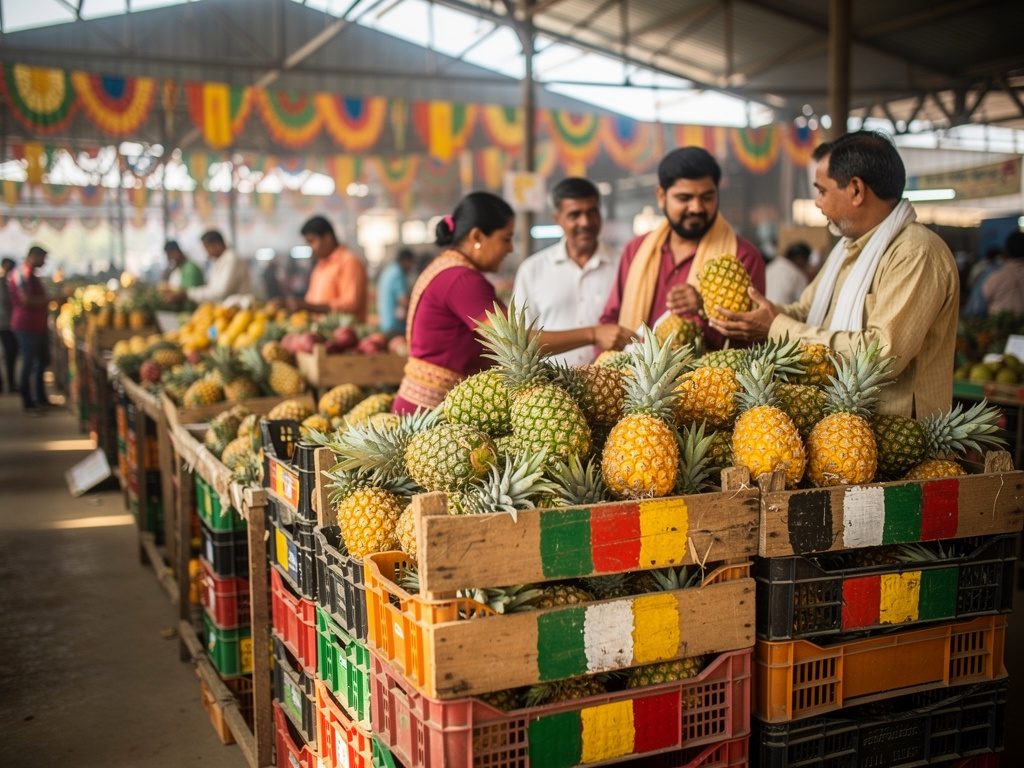
During the three-day festival, 30 metric tonnes of fresh Meghalaya pineapples were sold. Officials said this was nearly double the 15.4 metric tonnes sold in 2025 and close to four times the 7.7 metric tonnes recorded in the inaugural edition in 2023. For the state, the jump is seen as a sign of growing consumer interest in Meghalaya’s produce and its positioning as a premium offering.
Officials also say the festival helped shift the event from a promotional drive to a business platform. The government organised the programme through the Department of Agriculture & Farmers’ Welfare, and it included direct engagement with organised retail, hospitality buyers, exporters, and institutional customers. Visitors sampled not just fresh pineapples, but also indigenous foods and value-added products marketed under the “Meghalaya’s Finest” brand.
MoUs and plans for wider market access
A key outcome this year was the signing of memorandums of understanding with Flipkart and NCDEX e Markets Ltd. (NeML). The partnerships are expected to support wider market reach for Meghalaya pineapples and other high-value products such as Lakadong turmeric, ginger, honey, and processed foods. The state’s approach is to move beyond traditional farm-gate sales by improving aggregation, processing, branding, and digital marketing.
The government also said many participating farmers held business meetings in New Delhi. Some of them, officials noted, travelled to the city for the first time. The aim is to build repeat orders and longer-term buyer relationships, instead of relying only on festival sales. Chief Minister Conrad K. Sangma said the success reflected the work of Meghalaya’s farmers and entrepreneurs.
Going ahead, the state plans to place more emphasis on business-to-business engagement, export promotion, food processing, and brand development. The festival also included cultural performances connected to the Chief Minister’s Meghalaya Grassroots Music Programme, reflecting efforts to link farming, tourism, and creative industries in broader rural development.