Viswema village in Nagaland marks Te-L Khukhu, a festival dedicated to girls
In Viswema near Kohima, Te-L Khukhu honours girls through shared meals, millet-based rituals, and a legend about a toad’s “share” that shaped the tradition.
About 22 kilometres from Kohima, Viswema village in Nagaland observes an annual festival called Te-L Khukhu. The celebration is held on the 13th day of Chünyi in the Angami lunar calendar. It usually falls in July or August, after paddy sowing is complete. For this village, the day is closely linked to family gatherings and community life.
A festival remembered for girls
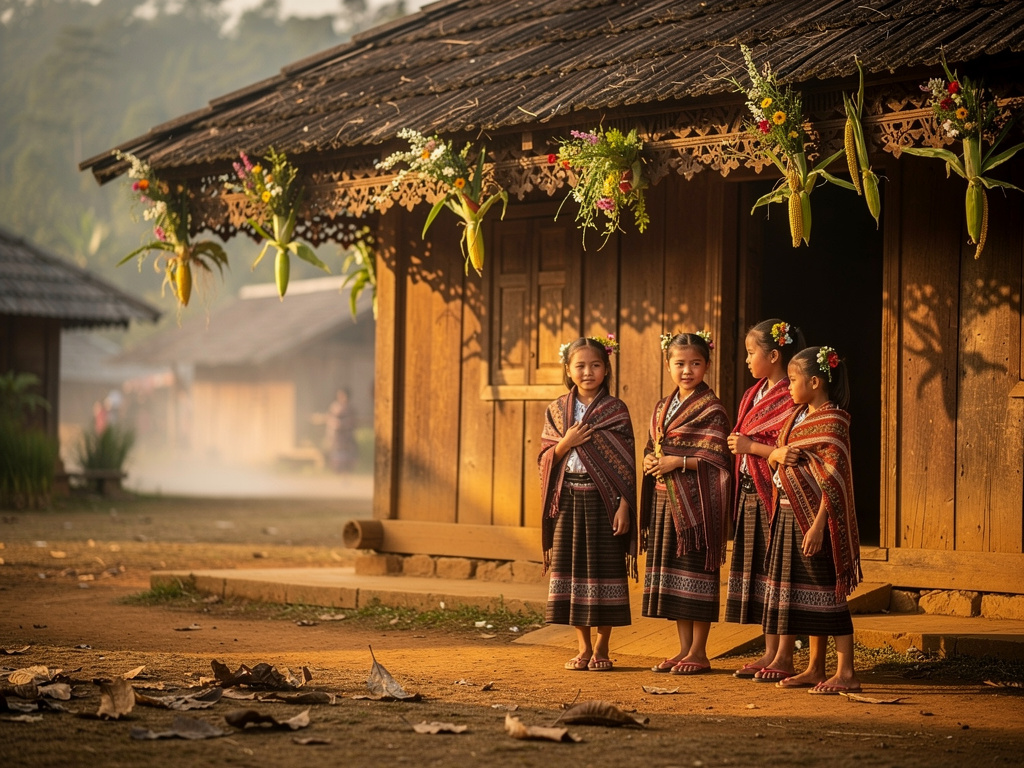
Te-L Khukhu is described as one of the Angami community’s traditional festivals that is dedicated exclusively to girls. The tradition began within the indigenous religious beliefs of the community. Over time, many ceremonial parts reduced with the spread of Christianity. Still, the festival continued, shifting into a cultural celebration that keeps older oral stories and values alive.
The festival name, Te-L Khukhu, is linked to Angami words meaning “toad” and “to share” or “to serve.” A local legend explains the origin. The story says a woman saw a fully ripened millet plant in a pond but could not reach it. She asked a squirrel and later a parrot, but neither returned with millet. Finally, a toad brought back an ear of ripe millet. In thanks, the woman promised to set aside part of her harvest each year for the toad. The annual promise is said to have shaped the festival.
Millet, offerings and community rituals
Millet remains central to the celebrations, including the festival meal known as Khukhu. Women traditionally prepare the food before the day’s rituals. The meal is served on folded leaves, in cone-like shapes, secured with small bamboo pins. In the past, portions included millet and rice, pork, eggs, snails, crabs, and other seasonal items. The platters were arranged in bamboo trays, covered, and left overnight so invited girls could receive them the next morning.
Before anyone in the household ate, mothers performed a symbolic offering by placing a small portion of rice in a corner of the house as the toad’s share. Tradition also describes a ritual near the hearth, where the first girl to arrive dropped small morsels of rice and meat twice before taking her first bite. The day includes shared meals and group fellowship, with girls taking part in ceremonies while men handled tasks like hunting and fishing.
Preparations and decorations also follow custom. House eaves and balconies are decorated with wildflowers and tender maize. The Rachü Women Society organised the grand event on July 27 this year, and residents from Viswema’s four khels came together for Te-L Khukhu Nyi, keeping an ancient promise linked to girls and harvest thanksgiving.