Mizoram protest at Vanapa Hall sparks online debate over gendered insults
A protest by Mizoram Congress workers at Vanapa Hall in Aizawl against CM Lalduhoma’s comments on the Inner Line Permit drew backlash online, with gendered mock
In Aizawl’s Vanapa Hall, a regular public protest space, Mizoram Congress workers staged a demonstration on Tuesday. The protest focused on the reported reaction to Chief Minister Lalduhoma’s remark related to the Inner Line Permit (ILP). The workers accused him of undermining the significance of both the ILP and the Mizo Peace Accord, and they demanded a public apology.
The protesters said they were giving the Chief Minister until 15 August to retract his statement. To make their point, they displayed a large poster featuring the Chief Minister wearing Puanfen, a skirt traditionally worn by Mizo women as an identity marker.
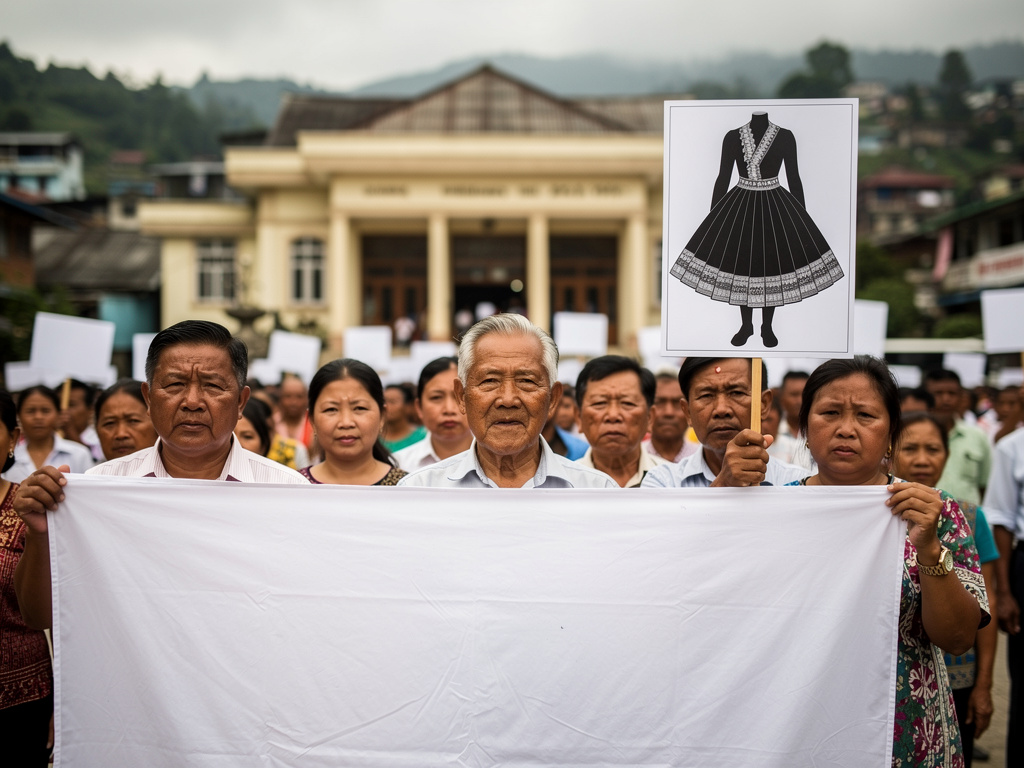
Poster choice and the stereotype it invoked
After the protest, the incident quickly moved beyond the hall. Edited images of Congress workers in female attire began circulating online in the days that followed. The reshared images reframed the original poster’s idea back at its creators, turning the exchange into a meme cycle.
While the dispute started as a political message aimed at one leader, the garment choice became central to the backlash. The concern raised in the online debate was that presenting a woman’s traditional clothing as a form of humiliation relies on the stereotype that femininity is weakness. The article also notes that many social media users treated the edits as humour, sharing and remixing them further.
Claim of progress does not end patriarchy
The discussion also highlighted a gap between public claims of social change and everyday attitudes. The article refers to the Chief Minister’s statement that Mizoram is the first fully literate state, and it points to women’s visible roles in education, employment, and public life. Still, it argues that gender bias can persist in political messaging.
For many people, the protest poster and the later online edits turned a disagreement over policy into an argument about what is considered acceptable to mock. The controversy has therefore become part of a wider conversation on whether political battles in the state still use misogyny as a shortcut for attacking opponents.