Dimapur–Kohima rail project cost rises nearly eight-fold, Parliament PAC flags planning and execution lapses
Parliament’s Public Accounts Committee reviewed the audit findings on the Dimapur–Kohima railway line and said deficient planning, land issues, design changes,
The cost of the Dimapur–Kohima railway line has climbed to Rs 6,663.20 crore from an original sanctioned estimate of Rs 850 crore, according to a report tabled in Parliament. The Public Accounts Committee (PAC) said the escalation was linked to a chain of failures in planning and execution, including deficient project preparation, faulty surveys, irregular land acquisition, repeated design changes, and weak contract management.
PAC links the cost jump to survey, land and contract problems
The PAC report is based on observations from the Comptroller and Auditor General (CAG), contained in Report No. 35 of 2022 relating to the Ministry of Railways. It reviewed the execution of the 78.42-km broad-gauge line connecting Dhansiri near Dimapur and Zubza near Kohima. The project was sanctioned in 2006-07 and was meant to bring all-weather rail connectivity to Nagaland, which had only a limited broad-gauge network at the time.
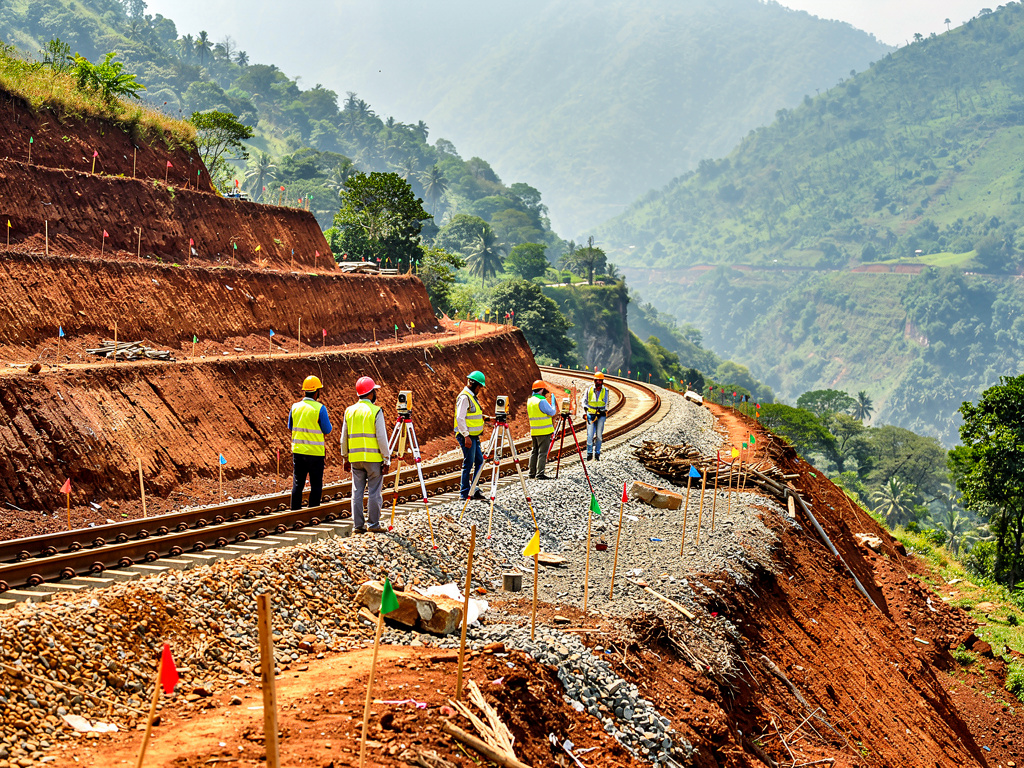
By the audit period, physical progress was reported to be below 25 per cent. The PAC said the project’s cost rose through successive revisions to the figure mentioned by May 2022. One key point raised was the failure of an original Final Location Survey carried out by RITES at a cost of about Rs 7 crore. The committee said the survey did not adequately reflect the complexities of the Neo-Himalayan terrain, leading the Railways to abandon the alignment and commission a fresh survey using digital terrain modelling and digital elevation modelling by a Spanish consultant.
Land acquisition and tunnel-related engineering choices also questioned
Land acquisition was highlighted as another major driver of spiralling costs. Audit findings pointed to expenditure linked to acquiring land on alignments that were later altered, procurement over tunnel stretches where surface acquisition was considered unnecessary, excess acquisition beyond prescribed limits, and additional compensation after re-surveys. The report also raised questions on engineering decisions relating to 20 tunnels, including wider tunnel cross-sections and a choice of flexible overhead electrification, which the audit estimated could create avoidable liability.
The PAC also questioned contract management. It noted signalling equipment procurement worth Rs 11.44 crore between 2017 and 2020 while civil construction was under one-fourth complete, which it said left the equipment idle for years. The committee further mentioned multiple extensions of time for contractors and the resulting price variation payments. The Railways responded that delays were caused by factors such as land disputes, local protests, landslides, road blockades, elections, COVID-19-related disruptions, and repeated scope changes. The Ministry said the project has since been divided into three phases, and the 16.2-km Dhansiri–Sukhovi section has already been commissioned.