NFHS-6 shows Northeast India strong gains on safety, but gaps remain in maternal care and nutrition
NFHS-6 data for 2023-24 points to sharp improvements in women’s safety, high menstrual hygiene coverage in some states, and lower child marriage in Sikkim and N
The sixth National Family Health Survey (NFHS-6) for 2023-24 paints a mixed picture for health and family outcomes in Northeast India. In Assam, the share of married women reporting that a husband has hit or coerced them fell from 32% to 16% over four years, a change described as moving faster than the national trend. The survey also highlights very low figures in some Northeast states, including Sikkim at 4.6% and Nagaland at 4%.
Safety gains stand out, while other issues move more slowly
Other indicators suggest that change can come through different routes. Financial inclusion is reported as broadly strong, with women owning and using their own bank accounts in most surveyed states at rates matching or beating the national 89%. Mizoram is cited at 94%. On earnings, the survey points to Meghalaya, where 44% of women reported earning cash from their work, compared with a national 31%—a pattern linked to local matrilineal practices as well as policy.
For young women’s health practices, the survey shows near-universal menstrual hygiene care in parts of the region. Mizoram is cited at 99% and Arunachal Pradesh at 97%. The data also shows improvements in child marriage at the lower end. Mizoram is close to single digits, and Sikkim and Nagaland are among the lowest with 9% and 10% respectively for women aged 20-24 married before 18.
Maternal access and stunting remain major concerns
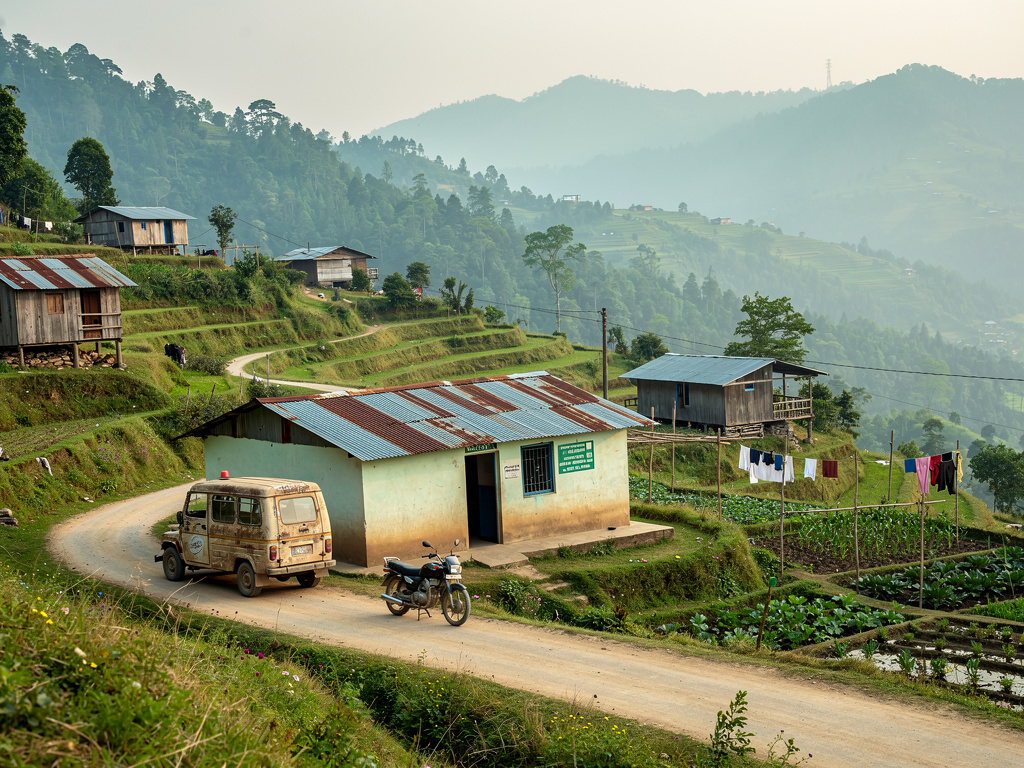
Despite these gains, NFHS-6 points to gaps in health service access. In Meghalaya and Nagaland, roughly two in three births happen in a hospital, while the national figure is more than nine in ten. Meghalaya also has one of the highest child-stunting rates among states, at 37%. The survey links part of this access gap to geography, noting that travel to facilities can be harder in hilly terrain.
Still, the survey also shows that geography is not the only factor. Sikkim already reports 98% of births in a facility and Mizoram reports 91%. The text describes how faster progress tends to come from services built for remote areas, including more health workers close to villages and transport support during delivery.
The survey highlights a new and widespread challenge for the region: tobacco use. Men in Mizoram are reported at 74% using tobacco, and the text says tobacco use among men sits between 45% and 58% across most of the Northeast—well above the national 36%. It is framed as a common risk that affects the region broadly, not only a few states.