Aaranyak deploys 15,000 seed balls in Assam to restore elephant habitat
Aaranyak is using a Japanese seed-ball technique to disperse 15,000 native seed balls in Udalguri’s Khalingduar Reserve Forest, along with invasive plant removi
An Assam forest restoration pilot is using a Japanese farming idea called “seed balls” to help revive degraded elephant habitats. The conservation organisation Aaranyak is preparing and dispersing seed balls made from native tree seeds across forest patches where regrowth has been weak.
According to the programme details, more than 15,000 seed balls have been readied using seeds of local species. They are being dispersed in Khalingduar Reserve Forest in Udalguri district as part of an integrated habitat restoration effort. The initiative is also linked to a small demonstration site in Samrang under the Dhansiri Forest Division.
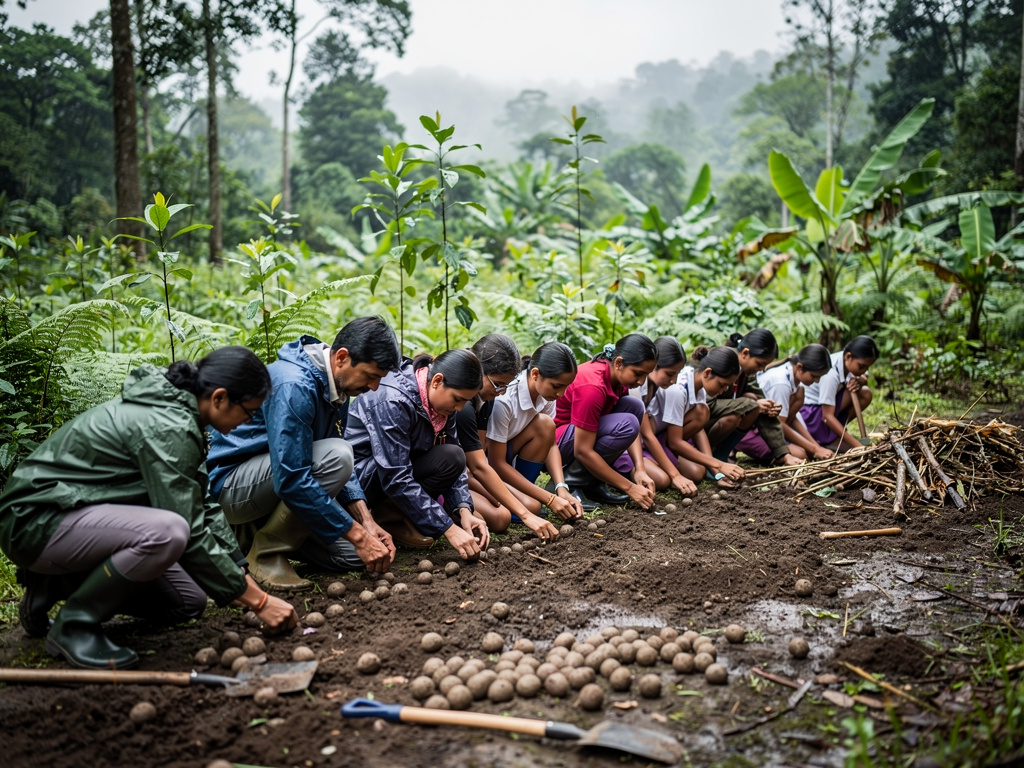
Seed balls coated for protection and natural germination
The method is based on a technique popularised by Japanese natural farming pioneer Masanobu Fukuoka. Seeds are coated with a mixture of clay, soil, and organic matter. This covering is intended to reduce drying and help protect seeds from birds, insects, and weather before germination begins.
The seed balls can stay dormant until rainfall and other conditions become favourable. This approach is described as useful for restoring large or difficult landscapes, where raising saplings in nurseries and planting them one by one can be labour-intensive.
Native species and invasive plant removal work together
Aaranyak has selected multiple native species for the seed balls, including Jamun, Bel, Khair, and Simalu, among others. Fruit-bearing and forage species are chosen for their potential to support elephants and other wildlife. Other trees are expected to help rebuild forest cover and improve habitat structure over time.
The intervention is not limited to seed dispersal. The work also involves removing invasive alien plants in restoration areas to create space for native regeneration. The programme brings together conservation staff, students, and local community members, along with the Jailkhlong community nursery, aiming to support natural forest regeneration and rebuild a functioning ecosystem.