Assam land dispute: Arrest of activist Pranab Doley raises fear among Kaziranga families
Families near Kaziranga National Park say their help channel has been disrupted after activist Pranab Doley was arrested, as protests and legal claims continue.
The arrest of activist Pranab Doley, convenor of the Greater Kaziranga Land and Human Rights Protection Committee (GKLHRPC), on July 13 has become a fresh flashpoint in a long-running land dispute on the fringes of Kaziranga National Park. The fight centres on nearly 60 bighas of land at Ingle Pothar, where different sides describe ownership in different ways.
Land use plans versus farming claims
According to the Assam government, the land belongs to the state and about 30 bighas have been earmarked for a proposed Tea Tribes Museum and a Hyatt hotel. Adivasi families in the area, however, say they have cultivated paddy there for generations and that they have documents to support their claims. The dispute has been marked by protests, court proceedings and competing claims over land rights.
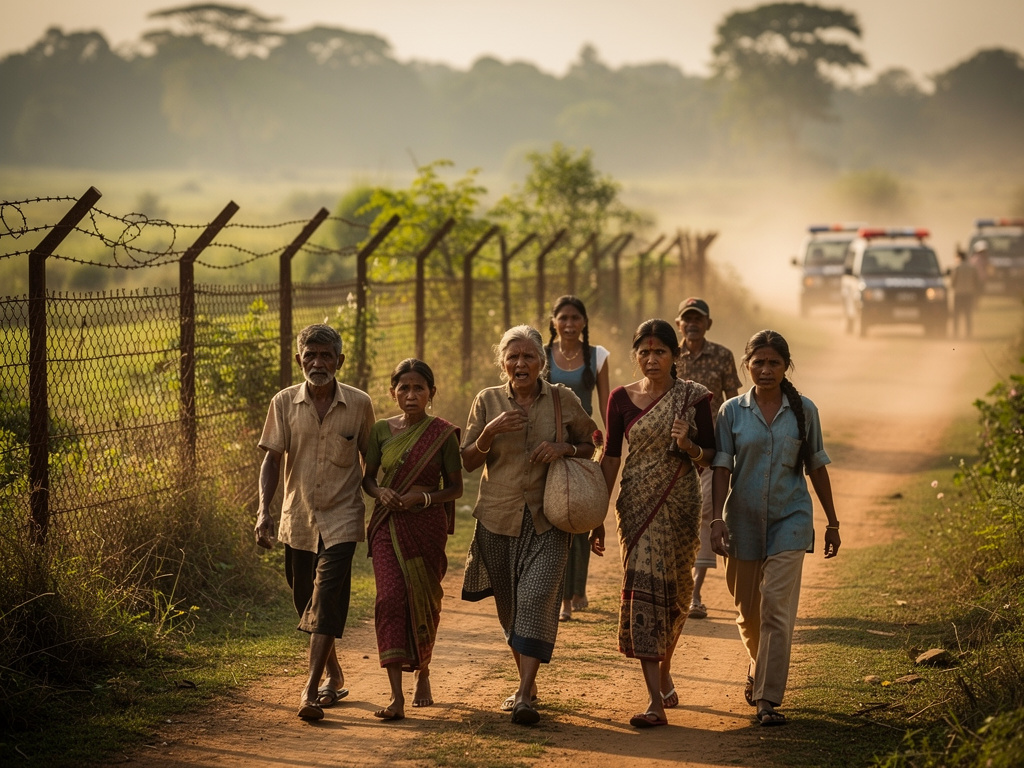
Doley was described by villagers as more than a protest leader. Many families say they relied on him to understand how officials work, how documents are prepared and how they should respond during meetings with the administration. Several families said that after his arrest, they are unsure who will help them navigate the next steps in the legal battle.
A meeting disrupted by police deployment
One family said the fear grew immediately after Doley’s arrest. Minali Gowala, who said her family lost around eight bighas of agricultural land, said villagers had planned a public meeting at around 8 am near Hatikhuli Tea Estate’s labour lines to discuss the land dispute. She said the meeting did not take place, and that police personnel were present at the site. Videos circulating on social media from that day were mentioned in the report, including images that appear to show police deployment and a confrontation between police personnel and members of the Adivasi community.
Gowala and others also explained why Doley’s role mattered in day-to-day communication. They said many villagers do not understand English, while official discussions are often conducted in English. As a result, they said they were concerned that they might sign or agree to something they do not fully understand, unless someone can explain the process in a way they can follow. Another villager, Mangra Munda, said fencing restricted access to the land and that the situation now feels like a fight against the government. The report also described Gita Gowala as one of the visible faces of the protest, with a video showing her leading protesters through the streets.