Archaeologists uncover prehistoric habitation evidence in Noklak cave sites
A joint research team studying caves and rockshelters in Noklak district, Nagaland, reports findings that include pottery, tools and hearths, with one site tent
Archaeologists have found evidence of prehistoric human habitation in caves and rockshelters in the Naga Hills Ophiolite Belt of Noklak district, Nagaland. The work focused on limestone karst terrain in the Chiphur area, where researchers identified multiple cave and shelter sites with help from the Chiphur Village Council.
What the team found at Chiphur area sites
A joint team from Nagaland University’s Department of History and Archaeology and the Government of Nagaland’s Department of Art and Culture carried out a preliminary cave expedition in March this year. The team led the field search with support from local participation and conducted intensive foot exploration to document caves and rockshelters.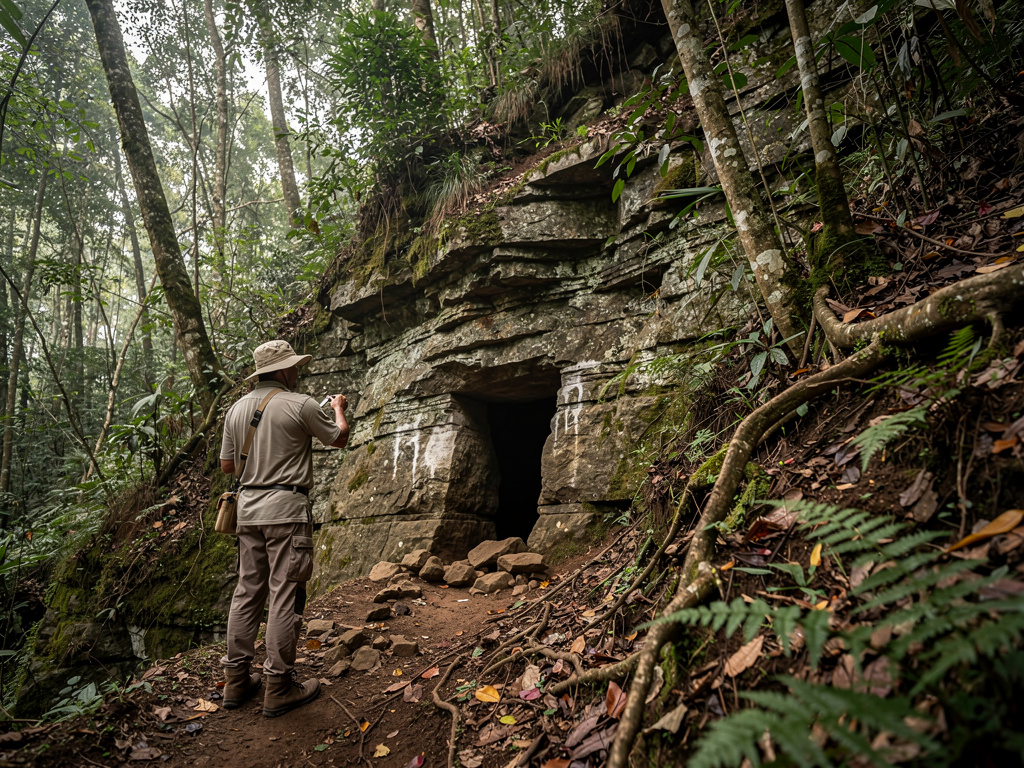
Excavations at high-altitude locations brought up several categories of material linked to daily activities and food use. Researchers reported cord-marked pottery, ground stone tools, hearth features, carbonised cereal remains, and wild faunal remains. Among the cereal remains, the study identified foxtail millet (Setaria italica) and Job’s tears (Coix species).
Dating and what it suggests about long-term use
Two sites were dated using Accelerator Mass Spectrometry analysis carried out by a laboratory in Florida, United States. The Leilo Kaa rockshelter was dated to about 3,500 years ago, while the Kathso Kaa cave site was dated to about 1,000 years ago. Based on the exploration, documented caves and rockshelters suggest that these places were used from the prehistoric period into the historical period.
The researchers said Northeast India is widely considered a corridor of human migration, and that the Naga Hills Ophiolite Belt and the Naga Metamorphic Complex in the Chiphur and Mimi regions hold significant archaeological value. They also noted that scientific dating of Nagaland cave and rockshelter sites can help build a broader picture of early populations, including subsistence patterns, tool and ceramic technology, burial traditions, and possible worldviews.
A public exhibition of the excavation finds is planned for October this year by the State Museum under the Department of Art and Culture, Government of Nagaland, along with Nagaland University.