European Researcher Leaves Academic Career to Build Village-Based Work in Sikkim
A researcher with a background in psychology and psychotherapy has moved to East Sikkim to support a digital nomad village and expand the model to other parts.
Naman Jain, who studied psychology in Italy and later worked in fields connected to mental health, has shifted from an office and clinic-focused career to life in Sikkim’s villages. After years of research and psychotherapy work, he says he was looking for something larger than one-to-one sessions and wanted to be closer to community life.
In Sikkim, that search led him to Yakten, a village in East Sikkim’s Pakyong district. Yakten is part of the Nomad Sikkim initiative and was declared India’s first digital nomad village. The idea is to support remote professionals with a place to live and work, while also creating steady income for local homestay families beyond the short tourist season.
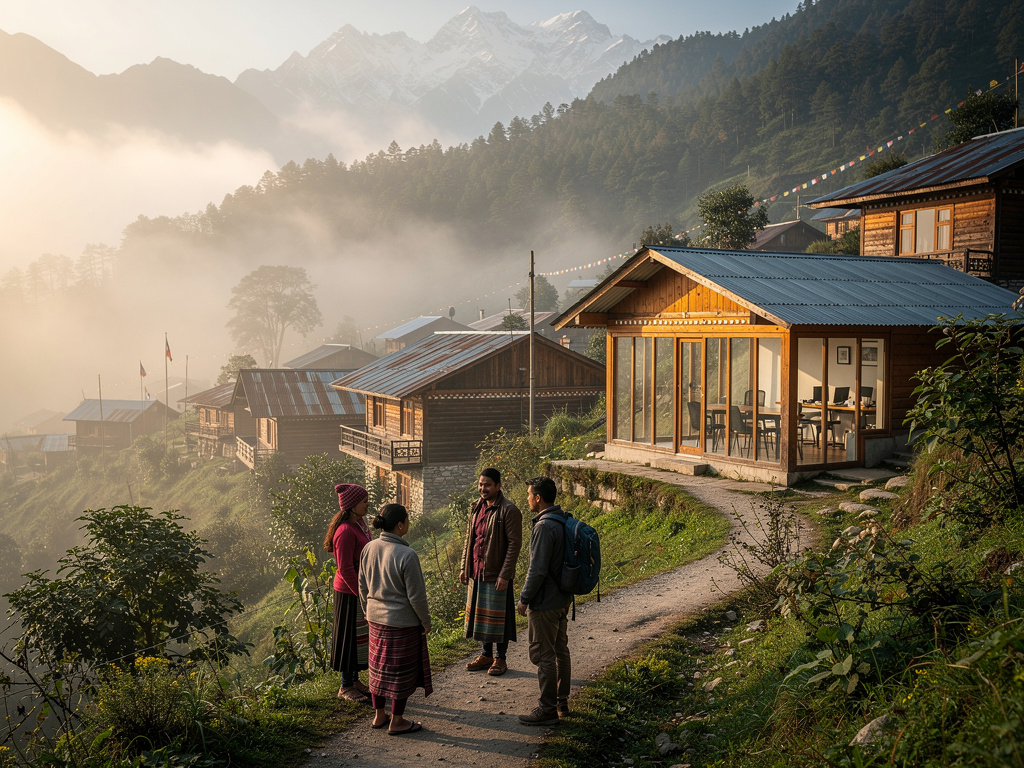
Yakten’s model links remote work with village life
People familiar with Jain describe him as community oriented even during earlier work that typically keeps professionals isolated. At Yakten, he worked and supervised day-to-day activities, focused on keeping the village connection central to the experience. The village setup includes homestays that host guests, co-working spaces, and meals connected to local organic produce. Evenings are designed for conversation, not screen time.
Expanding to Rey and Gumbadara
After several months at Yakten, Jain has moved on to upcoming projects in Rey and Gumbadara in Soreng, West Sikkim. The plan is to repeat the same approach—strong ties between visitors and hosting families and a structure that allows locals to benefit directly from the work that brings in visitors.
As part of daily life at these village stays, he helps guests with yoga and meditation, and also organises hill treks. He is also involved in keeping travel grounded and shared, including arranging experiences that involve getting around locally rather than relying only on booked private transport. In his work, the local community is not treated as an audience, but as a core part of what happens in and around the homestays.
The shift reflects a change in setting more than a change in interests. Jain’s background in how people connect and heal remains at the centre, with the focus now moving from research and therapy settings to community and village routines in Sikkim.