Thousands cross into Spain’s Ceuta from Morocco, authorities report dead and mass repatriations
A large surge of migrants crossed into Spain’s enclave of Ceuta from Morocco over two days, with Spanish authorities reporting multiple deaths, injuries, and a
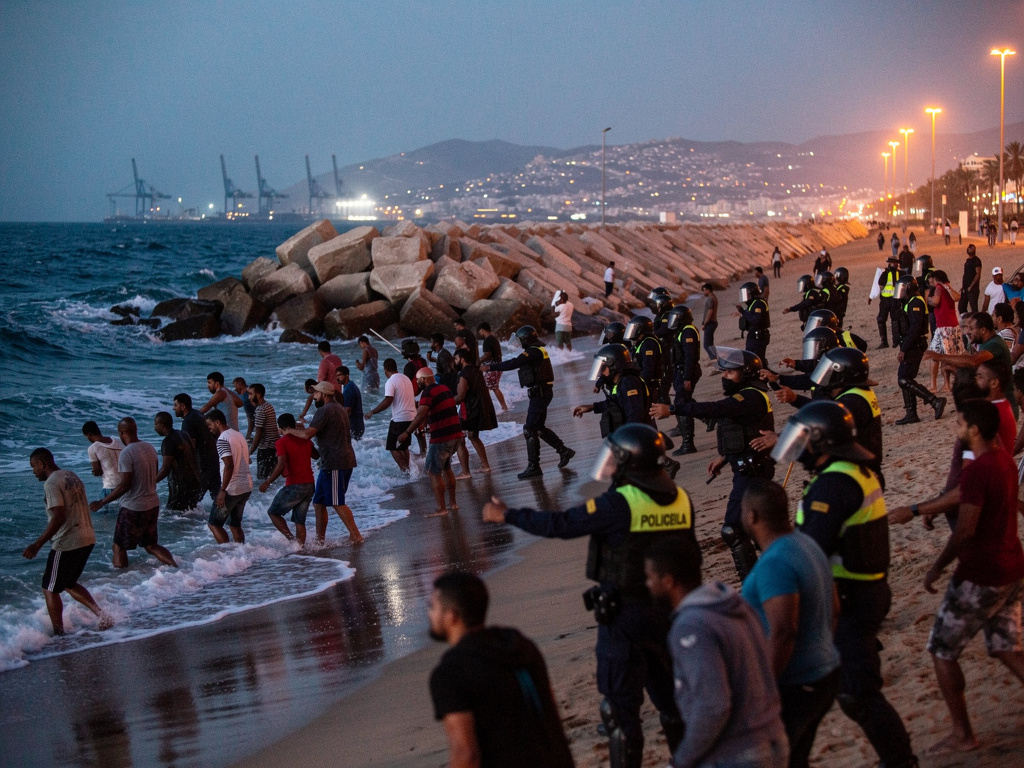
Spain’s North African enclave of Ceuta has been hit by a sudden border crisis after large groups of migrants crossed from Morocco over the past two days. Spanish Interior Ministry figures say close to 50,000 people arrived between Thursday and Friday, in what regional authorities described as the largest single surge in the enclave’s border history.
Most arrivals reached Ceuta from the Moroccan side by sea, including people swimming around the Tarajal breakwater. Others crossed on foot along the shoreline or climbed parts of the border fence. The crossings began late Thursday, July 30, and intensified overnight into Friday, July 31.
Deaths, injuries and overwhelmed reception
Spanish and regional officials reported severe consequences. Authorities say 57 bodies were recovered on the Spanish side, and they warned the toll could still rise. The reported causes include drownings during attempts to swim around the breakwater and deaths in a crush as people tried to force entry near the Tarajal fence area.
On the ground, Ceuta’s reception capacity was under heavy pressure. Officials described conditions as a serious humanitarian situation, with thousands of people, including unaccompanied children, sleeping in public areas such as sidewalks and parks after reception centres became overwhelmed.
Spain cites a court ruling; Morocco says crowds were misled
Spanish and Moroccan officials link the surge to a Supreme Court ruling issued on June 29. Spain’s Interior Ministry said the ruling changed how some sea interceptions are handled, and that smuggling networks spread a distorted version of the judgment through social media to encourage people to attempt the crossing by sea. Rights activists in Morocco disputed this explanation, saying many migrants may not have understood the legal reasoning.
By Friday evening, many arrivals had already left. Spain reported that more than 48,300 migrants returned to Morocco voluntarily, including roughly 25,000 repatriations processed on Friday alone.
Spanish Prime Minister Pedro Sánchez visited Ceuta and called the mass crossing a violation of Spain’s territorial integrity, blaming trafficking networks. He also announced steps including a temporary reception centre and plans to place buoys near Tarajal beach to clearly mark the maritime border in line with the court’s ruling. Additional police and military units were deployed to the enclave.
The crisis has also triggered political and European Union responses. Italy and France announced additional border checks, and European leaders discussed whether Spain could face action related to Schengen. The European Commission President called images from Ceuta unacceptable and said the EU cannot allow entry outside agreed rules.