Assam fossil leaves suggest kewra lineage existed at least 24 million years ago
Fossilised leaf studies from Assam’s Makum Coalfield indicate the kewra (kevda) plant lineage survived on the Indian subcontinent for at least 24 million years,
Fossilised leaves collected from Assam’s Makum Coalfield have been linked to the kewra (kevda) plant, suggesting that its lineage lived on the Indian subcontinent for at least 24 million years. The find points to a very long natural history for a plant that is widely known for its fragrance and for uses in food, perfumes, traditional practices, and temple rituals.
What the Assam fossils reveal
The study, published in the international journal Geobios, was carried out by scientists Harshita Bhatia and Gaurav Srivastava of the Birbal Sahni Institute of Palaeosciences (BSIP) in Lucknow. They studied four exceptionally preserved fossil leaves recovered from the Tikak Parbat Formation in the Makum Coalfield of Tinsukia district. The researchers used morphological and microscopic analyses to match the fossils with the Pandanaceae family, also known as the screw-pine family, which includes the modern kewra plant Pandanus.
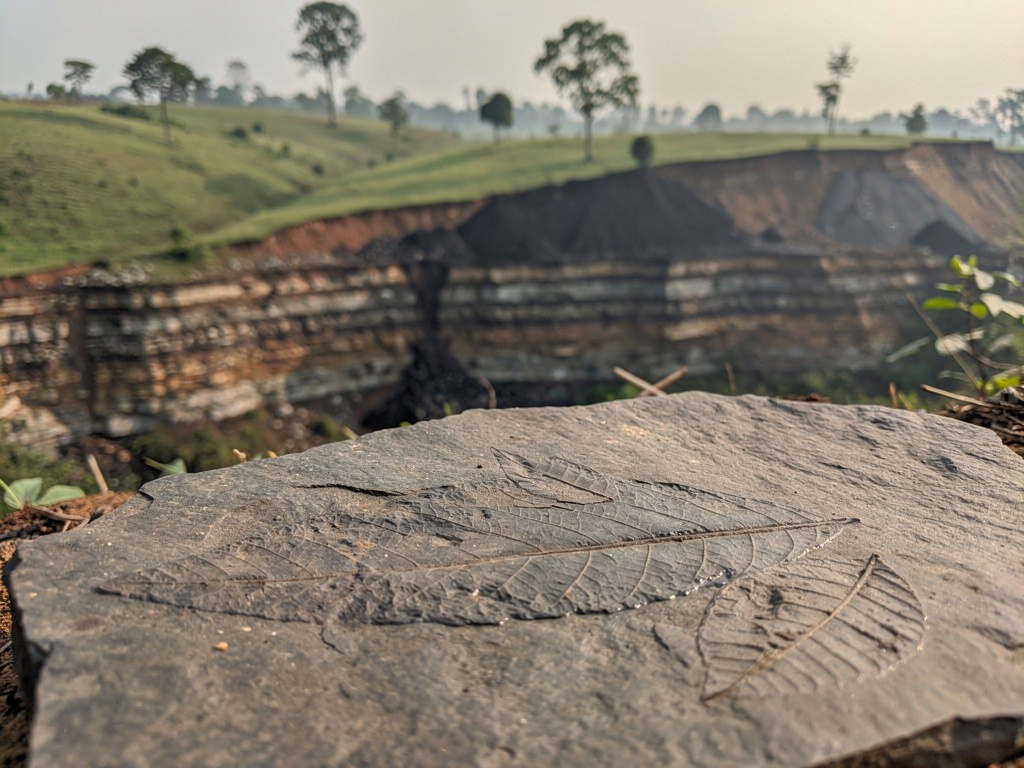
The fossil leaves show features similar to living kewra plants. They have long sword-shaped leaves with parallel veins. The study also describes an M-shaped cross-section and sharp marginal prickles, traits seen in today’s kewra. Scientists say this strengthens the idea that the plant family’s characteristics remained remarkably stable over millions of years.
A missing link in plant evolution
The fossils help fill a gap in the evolutionary record of Pandanaceae. Earlier screw-pine fossils reported from Europe and North America date to roughly 85–66 million years ago. Other records from tropical Asia and Australia are younger. The Assam material is described as a missing link between these regional and time-based findings.
The researchers also connect the discovery to past climate and habitat conditions. Geological and palaeoclimatic evidence cited in the study suggests warm, humid lowland forests in the region during the period when the leaves formed. The landscape is described as including freshwater swamps and river-like ecosystems, similar to habitats where screw-pines still grow. The findings add to the view that the Indian subcontinent acted as a refuge for ancient tropical plant lineages during major climate change.
Beyond science, the study connects the plant to everyday life. Kewra flowers are used to make aromatic kewra water and essence, including for sweets and biryanis. The researchers say the fossils also highlight the importance of Northeast India’s fossil record for understanding how tropical forests, biodiversity, and climates evolved over deep time.