Assam musicians take to the streets: Busking turns into flood-solidarity drives
Guwahati and nearby areas see local musicians perform on streets as busking efforts gather support for people affected by recent floods in Assam.
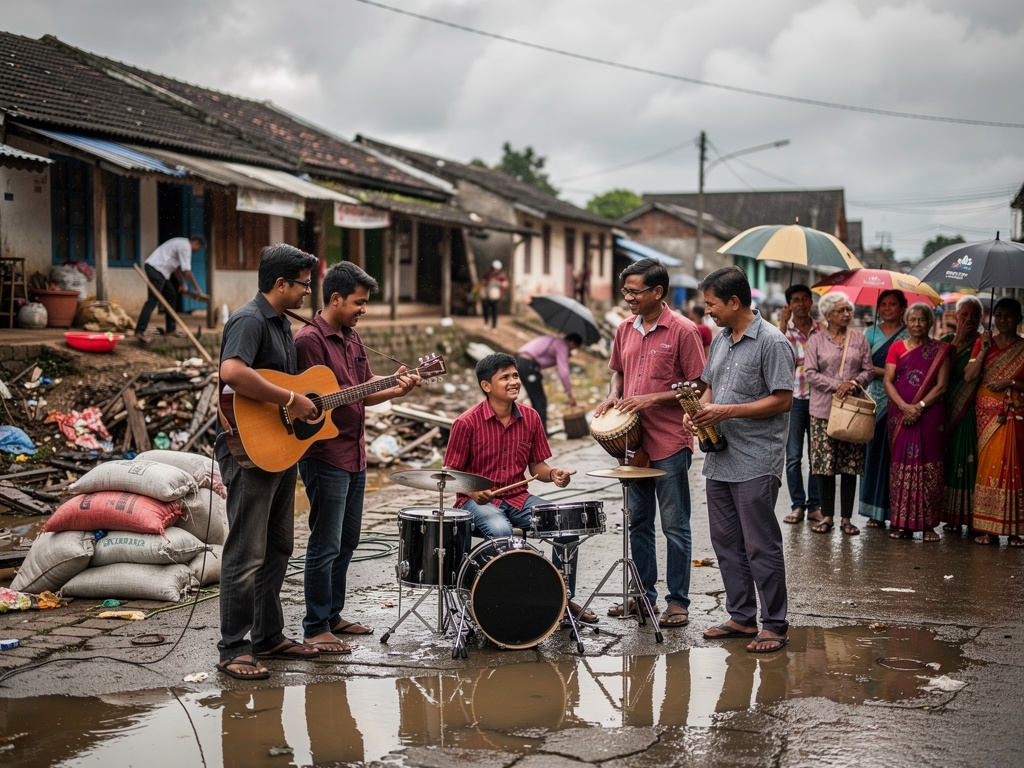
As severe floods hit Upper Assam, artists and community groups have stepped in with relief work that goes beyond traditional donation drives. Along with collecting and transporting essentials like clothes and medicines, some musicians have been taking their performances to public spaces, a move commonly described as busking.
Music in public spaces becomes a fundraiser
Busking, though newer to many Assamese performers, draws on a long cultural practice of using art to connect with society. The tradition is reflected in the history of Assamese music, where songs have often carried themes of politics, inequality, displacement, and human dignity. For many listeners, music is not separate from public life.
One example discussed in the report is the Assamese musician Jayanta Hazarika and his contemporaries, who formed Xur Bahini in 1977. The group came together to raise funds and collect public donations during floods, using performances and public participation rather than online tools. The current street performances follow a similar impulse, even if the way people gather support has changed over time.
Young bands describe why it works
Guwahati-based musicians say the idea took shape during local flood disruptions. Anish from the band Malkauns shared that after he was stuck in the city during a flash flood, he and his bandmate Rahul discussed supporting people in Sivasagar through street performances. He said busking offers transparency because whatever the performers manage to collect is directed to the cause.
Another vocalist, Pritom of the band SMACK, said the approach helps people contribute even if they do not have much money. “We have our art, we have our music,” the report notes, pointing to the low barrier for participation. The same spirit has also appeared in wider past events referenced in the story, including the 2004 tsunami response, when artists used multiple forms of creative work to support affected communities.
The report also links this street-based response to Assam’s cultural memory of artists who combined public work with art, including Zubeen Garg. It notes that relief and social causes were part of his public role, including involvement during the 2019 floods. With that background, younger musicians have been choosing to step out from stages and into public spaces, using performances as a direct way to stand with people facing flood impacts.