Gauhati University team develops captive breeding protocol for rare Himalayan snakehead
Researchers report a hormone-induced captive breeding protocol for Channa andrao, a rare Eastern Himalayan snakehead popular in the aquarium trade, aimed at减少依赖
Researchers have developed a captive-induced breeding protocol for Channa andrao, a rare snakehead fish found in swampy habitats of the Eastern Himalayas. The work is expected to reduce the need to collect the species from the wild, where it has been largely sourced for the ornamental fish market.
The study was carried out by scientists from the Aquaculture and Biodiversity Centre at Gauhati University, in collaboration with researchers from ICAR–National Bureau of Fish Genetic Resources (NBFGR). They report that their approach, published in Fish Physiology and Biochemistry, uses a hormone-induced technique to trigger breeding and improve spawning outcomes in captivity.
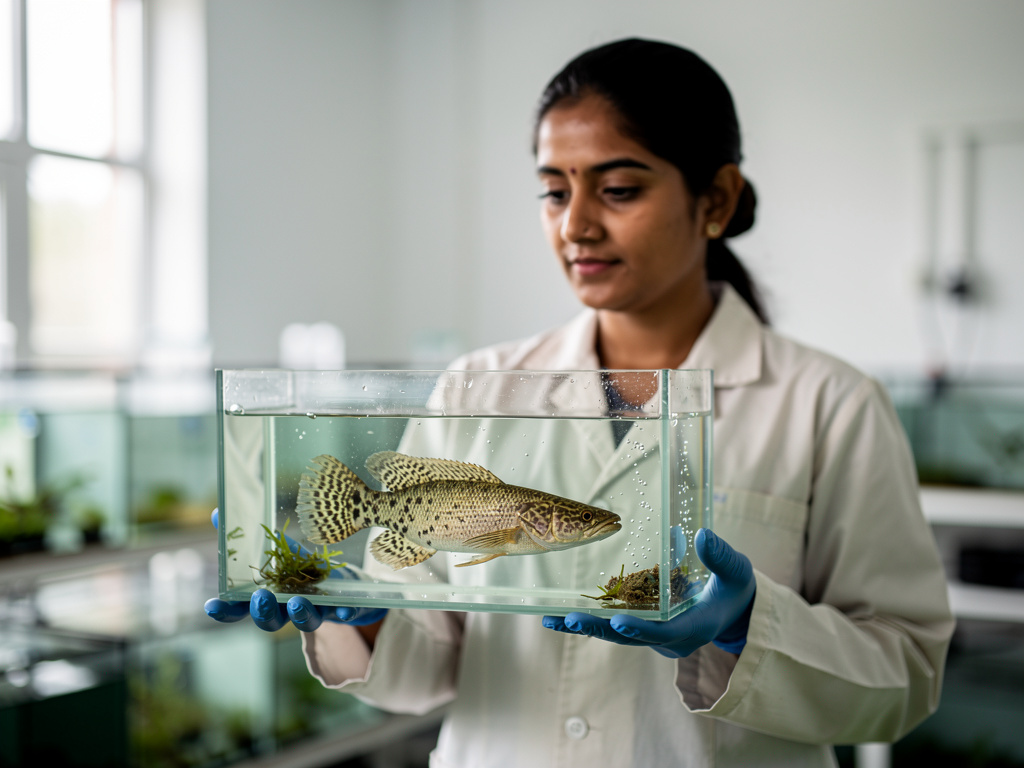
Hormone-induced technique supports spawning in captivity
The researchers describe a method designed for hatchery settings. They observed that the protocol enabled spawning success in their captive breeding work, creating a practical basis for producing seed fish without relying on wild stocks. This could also support the ornamental fish sector in Northeast India by making captive production more reliable.
Along with the breeding protocol, the study documents the species’ reproductive behaviour. Male Channa andrao are mouthbrooders. They collect fertilised eggs inside their mouths and incubate them until the larvae hatch. The team also noted rhythmic mouth movements, which they say help oxygenate the developing embryos. After the young fish are released, the male continues to guard and care for the larvae.
Paternal mouthbrooding is essential for embryo development
The researchers report that embryo development fails when eggs are removed from the male’s mouth. They say this points to how critical paternal mouthbrooding is to the reproductive success of the species. Based on these findings, hatchery programmes could be better designed to match the fish’s natural breeding needs.
The team includes Diksheeta Chutia, Manoj Talukdar, Jayanta Kumar Nath, Juri Konwar, Adity Deka and Dandadhar Sarma from Gauhati University, along with Rejani Chandran, Rajeev K. Singh and Kajal Chakraborty from NBFGR. The findings also highlight the potential for conservation-focused breeding to lessen pressure on natural swamp habitats where this endemic snakehead lives.